Creating a Laboratory Relocation Timeline: What to Do, When, and Why It Matters
Relocating a laboratory is a highly detailed process that goes far beyond packing and transportation. Sensitive instruments, regulatory requirements, hazardous materials, and research continuity all depend on careful timing and coordination.
In this guide, you’ll learn how to:
- Build a realistic laboratory relocation timeline
- Plan each phase of the move to protect equipment and maintain compliance
- Reduce downtime and keep research operations on track
- Coordinate packing, transport, setup, and validation
- Partner with the right laboratory moving specialist
A well-planned laboratory relocation timeline helps protect equipment, maintain compliance, and minimize downtime. With the right preparation and partners, a lab move can be both efficient and low-disruption. Below is a practical guide to what to plan — and when — for a successful transition.
Start Early with Strategic Lab Relocation Planning
Every successful lab relocation begins with early, thoughtful planning. For most laboratories, this should start six to twelve months before the anticipated move date, especially for larger or highly regulated facilities.
At this stage, your team should focus on:
- Conducting site and facility assessments
- Defining decommissioning and recommissioning requirements
- Identifying regulatory and safety obligations
- Creating a formal laboratory relocation project plan
It’s important to assemble a relocation team that includes lab leadership, safety officers, compliance staff, IT, facilities, and your laboratory moving partner. A documented transition plan helps everyone stay aligned and accountable throughout the process.
Tip: Designate one person to oversee documentation and chain-of-custody from start to finish.
Build a Detailed Laboratory Move Checklist
Once planning is underway, a comprehensive laboratory move checklist becomes your primary tool for staying organized.
This checklist should address:
- Equipment and asset inventory tagging
- Sample classification and preservation planning
- Temperature-controlled transport requirements
- Cleanroom relocation protocols
- Hazardous materials handling and documentation
- Post-move testing, calibration, and validation
Different assets require different handling methods — from glassware, consumables and chemicals to freezers, bio safety cabinets, incubators and large benchtop equipment. Tracking each item carefully reduces the risk of downtime during relocation.
Tip: Color-coded labels can help match equipment and crates to specific rooms or zones in the new lab.
Phase Packing and Equipment Preparation by Zone
Rather than packing everything at once, a phased approach keeps the process manageable and reduces risk.
Begin with:
- Archived materials and non-essential supplies
- Secondary work areas
- Low-use instruments
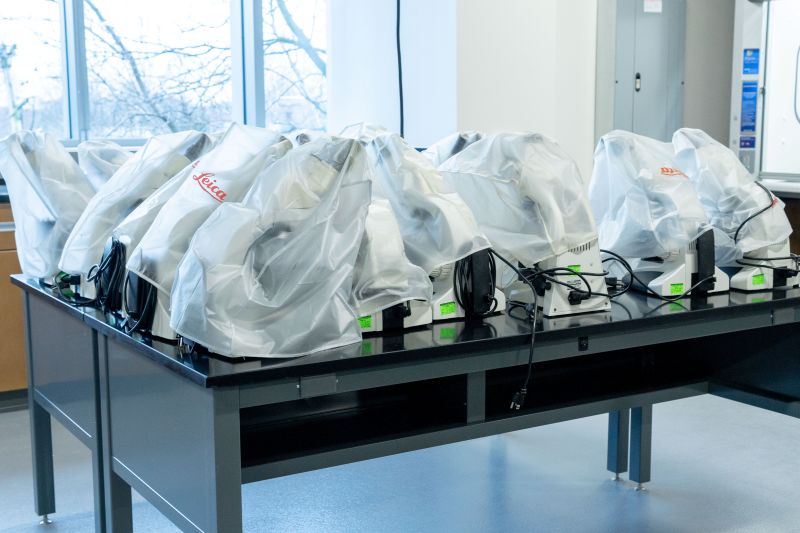
Save high-priority areas and core instruments for last. Many specialized systems — including analyzers and microscopes — may require vendor-supported disassembly and reinstallation.
Tip: Staging equipment moves in planned waves helps prevent last-minute congestion and rushed handling.
Coordinate Transportation and New Lab Setup
Choosing a laboratory moving company with proven experience in scientific equipment relocation is critical. Together, you’ll finalize:
- Move dates and sequencing
- Dock access and loading logistics
- Temperature-controlled vehicle requirements
- Vendor prepped equipment relocations
At the new facility, confirm that all systems are ready before equipment arrives:
- Power and backup systems
- Gas lines and ventilation
- Network and data connections
- Safety and storage systems
Your new lab setup schedule should include unpacking, placement, calibration, validation, and regulatory approvals. Depending on complexity, this phase typically takes one to two weeks.
Tip: Build buffer time into your timeline for inspections, permits, or unexpected delivery delays.
Minimize Downtime and Support Your Team
Clear communication plays a major role in a smooth transition. Keep staff informed with regular updates, defined roles, and clear expectations before and during the move.
To reduce downtime:
- Stagger workstation relocations
- Arrange temporary access to essential equipment or data
- Coordinate early IT and system reconnections
Plan for calibration and validation specialists to be on-site as equipment is installed, helping your team return to regular operations as quickly as possible.
Tip: Schedule a safety walk-through before reopening to confirm readiness and give staff confidence in the new space.
Partner with Laboratory Relocation Experts
Laboratory relocations demand experience, precision, and a strong understanding of safety requirements. The right moving partner helps prepare your equipment for relocation, protect sensitive items during transport, maintain temperature requirements, and keep your timeline on track.
At Hoffberger Moving Systems, we specialize in laboratory, healthcare, academic, and research relocations. From early planning and decommissioning through transport, setup, and validation, our team manages every detail, so your transition is smooth, safe, and efficient. Read case studies from real moves we’ve handled.
Planning a laboratory relocation?
Contact Hoffberger Moving Systems to discuss your timeline, equipment needs, and regulatory requirements — and start your move with confidence.
Frequently Asked Questions About Laboratory Relocation Timelines (FAQs):
How far in advance should a laboratory relocation be planned?
Most laboratory relocations should begin 6-12 months in advance, depending on the size of the facility and the complexity of the equipment involved. Highly regulated or equipment-intensive labs often benefit from even earlier planning.
How long does a typical laboratory relocation take?
The physical move may take only a few days, but the full process — including planning, packing, transport, setup, calibration, and validation — typically spans several weeks to a few months. Complex facilities may require additional time for inspections and regulatory approvals.
What equipment requires special handling during a lab move?
Common items requiring specialized handling include:
- Freezers and cold storage units
- Centrifuges and analyzers
- Microscopes and imaging systems
- Fume hoods and biosafety cabinets
- Cleanroom and controlled-environment equipment
Some of these systems require vendor-supported disassembly and reinstallation.
How can downtime be minimized during a laboratory relocation?
Downtime can be reduced by:
- Phasing the move by department or function
- Scheduling specialized equipment vendor support in unison with relocation schedule
- Maintaining temporary access to critical equipment
- Reconnecting IT and data systems early
Clear communication and a structured timeline are key to maintaining productivity.
What compliance and safety considerations are involved in lab relocations?
Laboratory relocations must address:
- Hazardous material handling and documentation
- Decontamination and cleaning protocols
- Post-move testing and validation
- Local, state, and federal regulatory approvals
Working with an experienced laboratory moving partner helps ensure compliance throughout the process.
Why should we use a specialized laboratory moving company?
Laboratory relocations involve sensitive equipment, regulatory oversight, and technical setup that standard movers are not equipped to handle. A specialized laboratory moving company provides trained crews, temperature-controlled transport, documentation support, and coordination with vendors and compliance teams.
What services does Hoffberger Moving Systems provide for laboratory relocations?
Hoffberger Moving Systems offers end-to-end laboratory relocation services, including:
- Relocation planning and timeline development
- Equipment packing and transport
- Temperature-controlled logistics
- Cleanroom and controlled-environment moves
Setup support with equipment manufacturer and any other post-move needs