Case Study: LifeBridge Health Cancer Center Relocation
Location:
- Baltimore, MD
LifeBridge Health — Sinai Hospital campus, including the Weinberg Building, Blaustein Building, and newly constructed Mandy & Dennis Weinman Cancer Building.

Project Overview:
LifeBridge Health engaged Hoffberger Moving Systems (HMS) to support a multi-phase healthcare relocation centered on the transition of the existing Sinai Cancer Institute into the newly constructed Mandy & Dennis Weinman Cancer Building.
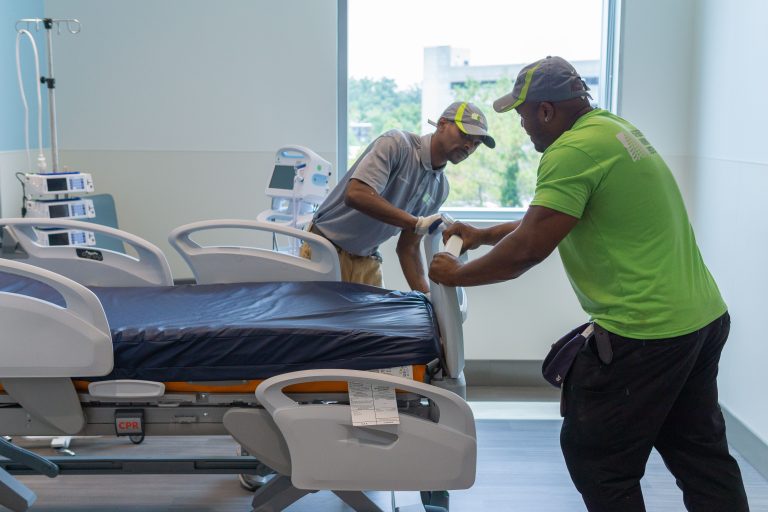
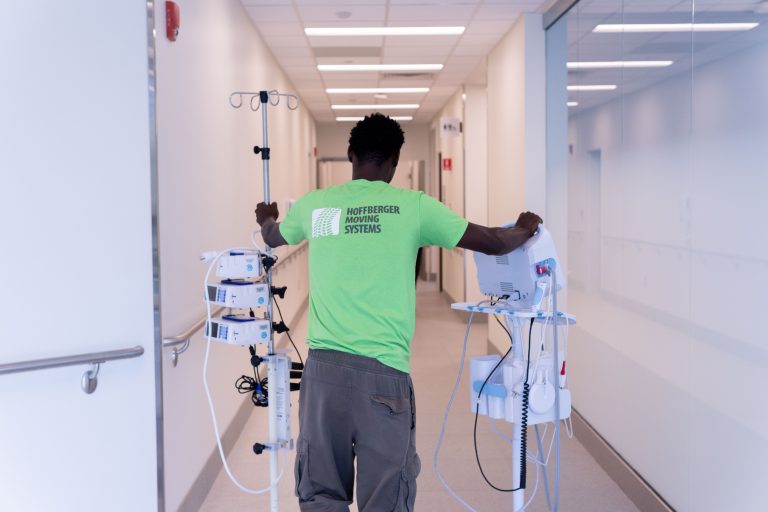
The project included relocating staff, packed contents, supplies, infusion chairs, mobile clinical equipment and other materials from the Weinberg Building and Blaustein Building into the new Cancer Building. HMS was also tasked with supporting Radiation Oncology through an interim move into temporary space followed by a final relocation into its renovated suite.
Because the work was taking place within an active cancer-care environment, the relocation plan was structured around patient treatment schedules, with major move activity planned for late afternoons and evenings.
Scope of Work:
HMS provided comprehensive move planning, packing support, equipment deployment, internal relocation and post-move services across multiple phases of the project.
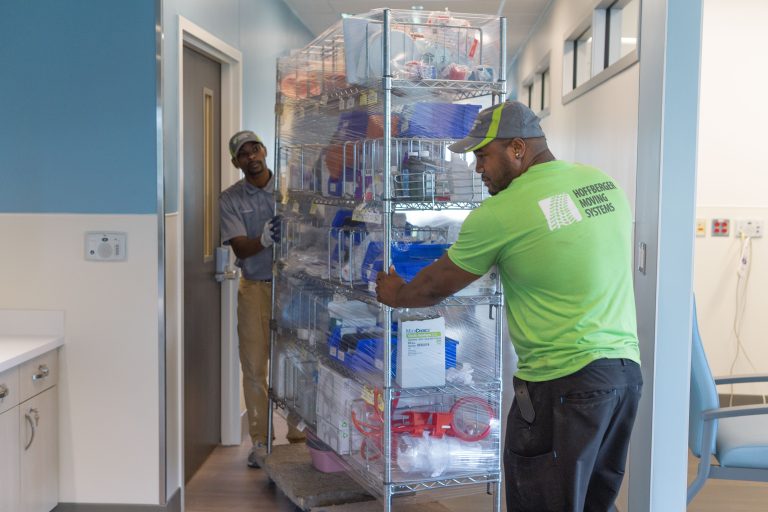
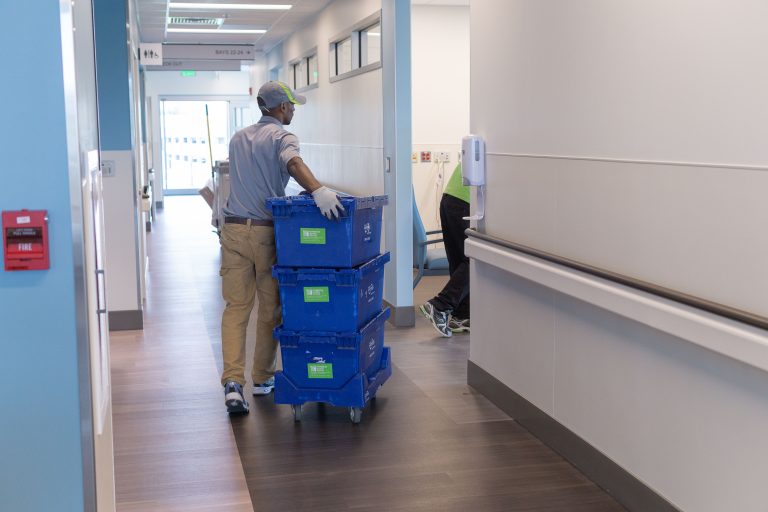
For the Cancer Center relocation, HMS supplied and coordinated 700 plastic crates, 175 crate dollies, 16 rolling carts, 100 computer bags, protective packing materials and a three-color labeling system corresponding to the floors of the new facility. Packing materials were staged and deployed over several dates to avoid overcrowding clinical areas and interfering with daily operations.
The primary Cancer Center relocation included:
- Staff and packed contents from the Weinberg Building’s ground and first floors, followed by additional staff from the Blaustein Building
- Infusion chairs and WOWs (workstations on wheels)
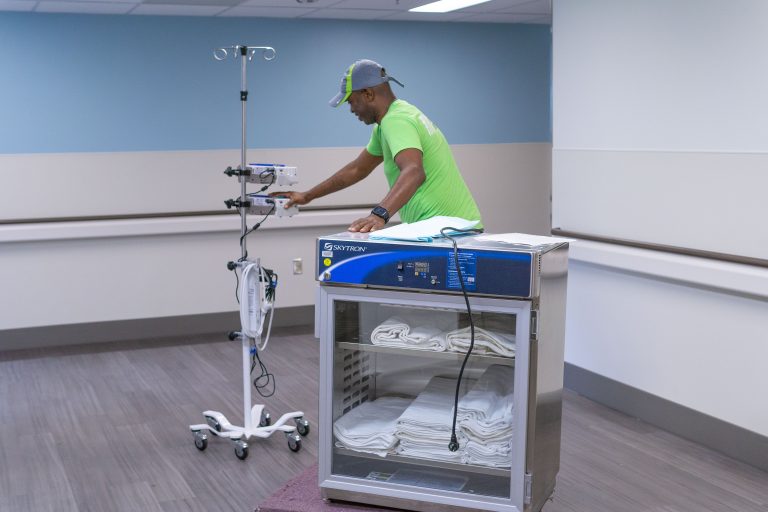
- Mobile clinical equipment and miscellaneous medical items
- Office, nurse station, exam room, supply and storage-area contents
- Placement and staging of items within designated rooms and clinical spaces
- Post-move installation support for designated wall-mounted items
- Multiple post-move sweeps to retrieve crates, dollies and carts
HMS also planned separate Radiation Oncology moves: an initial relocation of clinical offices, supplies and equipment into temporary space, followed by a later move into renovated permanent space.
Execution & Strategy:
The central challenge was completing a substantial relocation without unnecessarily disrupting an active patient-care environment.
HMS approached the project as a carefully sequenced internal logistics operation rather than a conventional office move. Packing equipment was deployed in stages, beginning with administrative and private office areas before moving into supply, storage and clinical spaces. This reduced congestion and allowed patient-facing areas to continue operating during move preparation.
During the primary Cancer Center move, HMS assigned a team that included a project manager, four supervisors, an installation supervisor, an installer, an equipment truck and driver, and 12 movers. Crews were divided between the origin and destination locations so work could progress simultaneously.
A color-coded labeling system identified the three destination floors. As each origin area was completed, destination crews followed the corresponding label color from floor to floor. Infusion chairs were placed directly into designated bays, while other mobile clinical equipment was staged in assigned locations or equipment rooms. Crates and carts were delivered to the appropriate offices, nurse stations, exam rooms, supply rooms and storage areas based on room-specific labels.
Another important component was timing. Radiation Oncology moves and the larger Cancer Center relocation were planned for the late afternoon and evening, after patient services or treatment schedules allowed. This helped separate relocation activity from the busiest periods of clinical operations.
Outcome:
The project demonstrates the level of coordination required when relocation work intersects with healthcare delivery.
Rather than treating the project as a single move, HMS developed a phased approach encompassing advance material deployment, temporary departmental moves, the primary Cancer Center relocation, final Radiation Oncology relocation, installation support and post-move equipment recovery.
The result was a relocation strategy designed to move staff, clinical equipment and operational materials into their appropriate destinations while keeping patient treatment schedules at the center of the planning process.
For HMS, the project reflects an approach developed specifically for sensitive healthcare environments: plan around operations, organize every destination in advance, and execute the physical move in a way that minimizes disruption to the people providing and receiving care.